
How to Cook a Frozen Turkey: A Step-by-Step Guide
Christmas in Australia means sunshine, backyard cricket, seafood platters, and for many families, a beautiful roast turkey at the centre of the table. But what happens if you forget to thaw it? To help you out, we have curated this guide that will show you how to cook a frozen turkey safely and how to achieve a juicy, golden roast.
Whether you’re planning ahead or in a last-minute festive rush, here’s everything you need to know about cooking a frozen turkey the right way.
How long should I cook my frozen turkey?
Slide to your turkey’s weight and pick your oven type. We’ll work out an estimated cook time. Times are a guide only, always finish with a meat thermometer.
Estimated cook time
3.0hours
Internal target
82°C
- These times assume cooking straight from frozen in a preheated oven. Never deep-fry a frozen turkey.
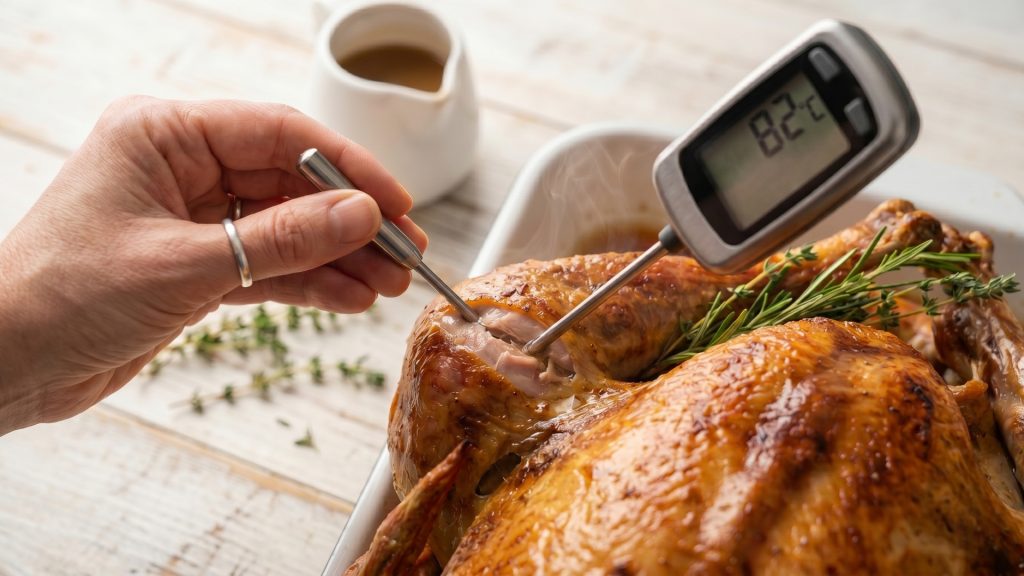
- The only reliable test is internal temperature. Use a meat thermometer in the thickest part of both the breast and thigh, it must reach 82°C (avoid touching the bone).
- Remove the giblets once the cavity has thawed during cooking. Do not stuff a frozen turkey.
- Rest the cooked turkey loosely covered for 20–30 minutes before carving.
Can You Cook a Turkey from Frozen?
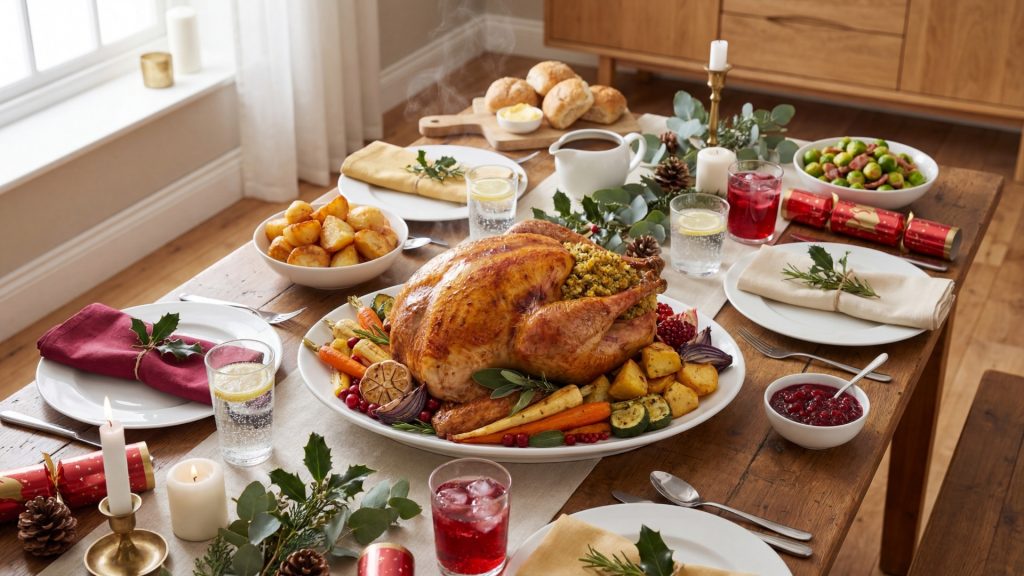
Many people ask, can you cook frozen turkey without thawing it first. The good news is yes, you can do it.
Cooking a frozen turkey is completely safe as long as:
- You cook it in the oven (not a slow cooker or deep fryer)
- You allow extra cooking time (around 50% longer)
- You properly check the internal temperature with a meat thermometer
- The thickest part reaches 82°C)
Why You Might Choose to Cook from Frozen
There are several reasons Australians cook turkey straight from frozen, especially during the busy festive season.
Last-Minute Christmas Prep
Christmas Day can creep up quickly, and with so much happening, it’s easy to forget to thaw the turkey in advance. Cooking from frozen is a practical solution when time gets away from you. With the right temperature and timing, your festive centrepiece can still turn out beautifully.
Food Safety in Warm Weather
December in Australia means summer heat, and that makes food safety especially important. Thawing a large turkey incorrectly can increase the risk of bacteria developing, particularly if left at room temperature. Cooking directly from frozen reduces handling and eliminates the uncertainty around safe thawing times. It’s a simple way to keep your Christmas meal safe in warm conditions.
Convenience
Thawing a large turkey can take several days in the fridge, which isn’t always practical when space is limited. Fridges are often packed with desserts, drinks and fresh produce. Cooking from frozen saves valuable space and removes the need for multi-day planning. It allows greater flexibility without compromising on quality.
Ingham’s frozen whole turkeys are snap-frozen to lock in freshness, grown on rural NSW farms and prepared to meet Australian standards. With our products, you can cook with confidence, even straight from frozen.
Safety First: Essential Rules for Frozen Poultry
Your frozen turkey safety checklist
0 of 6 checkedTap each rule as you go. Your progress saves automatically while you’re on this page.
- Oven only. Cook the turkey in a properly preheated oven, never a slow cooker, BBQ or low-temp method.
- Never deep-fry from frozen. Ice hitting hot oil causes serious splatter and fire risk.
- Don’t stuff it. Heat can’t circulate properly, the centre may stay undercooked.
- Use a meat thermometer. Thickest part of breast and thigh must reach 82°C. Don’t touch the bone.
- Cover with foil first. Tent loosely early to prevent the skin browning before the middle cooks through.
- Rest before carving. Let the turkey rest 20–30 minutes so the juices redistribute.
Before we walk through how to prepare a frozen turkey for cooking, let’s cover the non-negotiables.
Always Cook in the Oven
A frozen turkey must be roasted in a properly preheated oven to ensure even, consistent heat. Slow cookers, BBQs or low-temperature methods won’t safely bring the centre up to temperature in time.
Never Deep-Fry a Frozen Turkey
Deep-frying frozen poultry is extremely dangerous. Ice rapidly turns to steam when it hits hot oil, causing splattering, overflow and serious fire risk.
Do Not Stuff a Frozen Turkey
Stuffing a frozen bird prevents heat from circulating properly inside the cavity. This can leave the centre undercooked and unsafe, even if the outside appears done.
Use a Meat Thermometer
The only reliable way to know if your turkey is evenly cooked is by checking the internal temperature properly. It must reach 82°C in the thickest part of the breast and thigh.
Keep It Covered Initially
Loosely covering the turkey with foil during the early cooking stages helps prevent the skin from over-browning. This allows the interior to cook through evenly before crisping at the end.
How to Prepare a Frozen Turkey for Cooking
Wondering how to cook a turkey that is frozen? Before that, we need to understand how it is prepared.
Preparing a frozen turkey for the oven is straightforward, but it’s important to do it correctly to ensure safe and even cooking.
Start by removing all outer plastic packaging, including any clips or ties. If the wrapping is stuck to the turkey due to ice, simply run it under cold water for a few seconds to loosen it; never use warm water.
Place the frozen turkey breast-side up on a sturdy rack inside a large roasting pan. Elevating the bird allows hot air to circulate underneath, promoting more even cooking and preventing the base from sitting in excess liquid.
At this stage, the cavity will still be frozen solid, so you won’t be able to remove the neck and giblets yet. Continue with the initial roasting phase, and once the interior has thawed enough during cooking, carefully remove the giblets before seasoning and finishing the roast.
Step-by-Step: How to Cook a Frozen Turkey in the Oven
From frozen to golden, what to do, and when
Phase 1
Initial roast, uncovered
Preheat to 180°C (160°C fan). Place turkey breast-up on a rack, no foil yet. Exterior thaws, cavity loosens, moisture releases.
Phase 2
Remove giblets & season
Take the turkey out, remove the neck and giblets, then brush with oil or butter and season with salt, pepper and herbs. Tent loosely with foil.
Phase 3
Finish, check & rest
Remove the foil for the final 30–45 minutes. Probe to 82°C in breast and thigh, then rest covered for 20–30 minutes.
Here is the trusted method for frozen turkey cooking. Follow this to get the best experience.
Step 1: Preheating and Initial Roast
Preheat your oven to:
- 180°C conventional oven
- 160°C fan forced oven
Place the turkey uncovered in the oven for the first phase.
Because you’re cooking from frozen, allow approximately 50% longer cooking time than standard thawed instructions. For example, if thawed turkey requires 40 to 45 minutes per kg at 180°C, frozen turkey will require approximately 60 to 70 minutes per kg.
During the first 1.5 to 2 hours, the exterior will thaw, the cavity will loosen, and some moisture will release.
Step 2: Removing the Giblets and Seasoning
After about 2 hours (depending on size), carefully remove the turkey from the oven. Check if the cavity is soft enough to remove the neck and giblets, and then remove them safely and discard or reserve for gravy.
Now you can:
- Evenly brush the skin with olive oil or melted butter
- Season generously with salt and pepper
- Add herbs like rosemary, thyme or garlic
- Return to oven, loosely covered with foil
Step 3: Finishing the Roast and Checking Temperature
Continue evenly roasting the turkey until it reaches an internal temperature of 82°C. The most accurate way to check this is with a meat thermometer inserted into the thickest section of the breast, then again into the thickest part of the thigh. Make sure the probe does not touch the bone, as this can end up giving you a false reading.
If the skin begins to brown too quickly before the centre is fully cooked, loosely tent the turkey with foil to prevent over-colouring while the inside continues cooking. During the final 30 to 45 minutes, remove the foil so the skin can turn beautifully golden and crisp.
Once the turkey reaches 82°C, remove it from the oven and allow it to rest for at least 20 to 30 minutes before carving. Resting is very important, as it allows the juices to redistribute throughout the meat. This results in a tender and succulent roast.
How Long to Cook a Frozen Turkey
If you’re wondering how long to cook a frozen turkey, the guide below provides estimated cooking times to help you plan with confidence.
Estimated Frozen Turkey Cooking Times
| Turkey Weight | Conventional Oven 180°C | Fan Forced 160°C |
| Ingham’s 3kg | 3 to 3.5 hours | 3 to 3.5 hours |
| Ingham’s 4kg | 4 to 4.5 hours | 4 to 4.5 hours |
| Ingham’s 5kg | 5 to 5.5 hours | 5 to 5.5 hours |
| Ingham’s 6kg | 6 to 6.5 hours | 6 to 6.5 hours |
Important: These are estimates only. Always cook to 82°C internal temperature for safe consumption.
Tips for a Juicy and Golden Frozen Roast
So, how do you cook a frozen turkey to get a golden roast? Even when cooking a frozen turkey, you can still achieve a beautifully browned, tender and festive centrepiece with the right technique.
Elevate on a Rack
Place the turkey on a roasting rack inside the pan to allow warm air to circulate evenly around the bird. This prevents the base from sitting in liquid and helps the skin cook more evenly. Better airflow means more consistent roasting from top to bottom.
Add Liquid to the Tray
Pour a cup of water or stock to the bottom of the roasting pan. This prevents drippings from burning during the long cooking time and creates flavourful juices you can use for gravy. Just ensure the liquid doesn’t touch the skin directly.
Baste After Thaw Phase
Wait until the surface has fully thawed and begun to brown before basting. Brushing with pan juices, butter, or oil too early won’t be effective on frozen skin. Basting later helps enhance colour and flavour.
Rest Properly
Let the turkey rest for at least 20 to 30 minutes under loose foil after cooking. Resting the turkey helps the juices redistribute throughout the meat, keeping it moist and easier to carve.
Carve Against the Grain
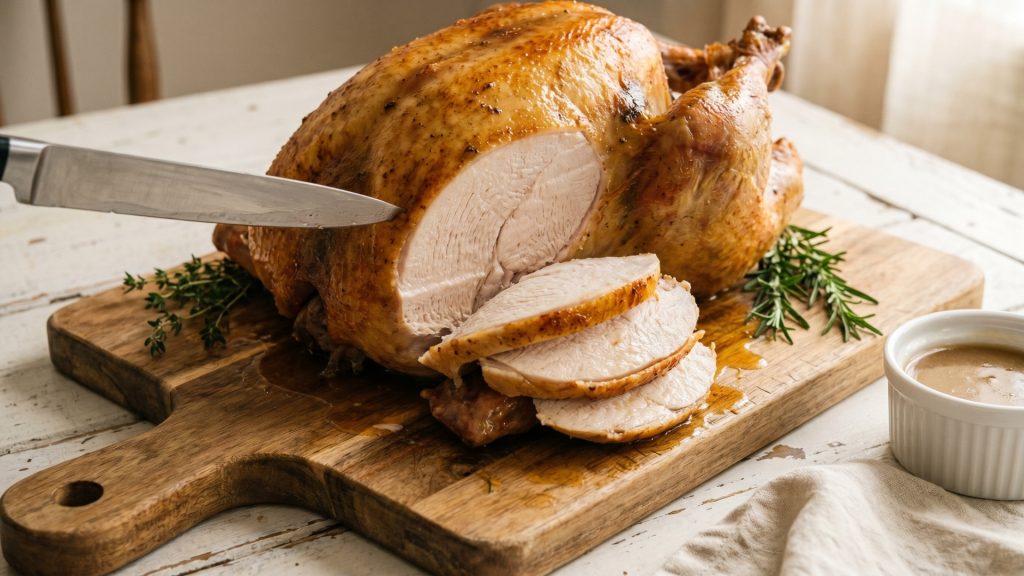
When slicing the breast meat, cut against the natural grain of the muscle. This shortens the muscle fibres and results in more tender, succulent slices for serving.
Australian Christmas Considerations
Leftover turkey, the safe storage clock
Aussie Christmases are warm. Here’s the timeline to follow once the turkey is off the table, so leftovers stay safe through Boxing Day and beyond.
Within 2 hours
Cool & refrigerate
Carve, portion into shallow containers and get into the fridge within two hours of serving.
Do this firstIn the fridge
5°C or below
Store cooked turkey in an airtight container on a middle shelf. Keep it away from raw produce.
Best practiceEat by
3–4 days
Use refrigerated leftovers within three to four days. Reheat to piping hot all the way through.
Use it upOver 4 days
Freeze or bin
Freeze within 2 days of cooking for up to 2–3 months. Past 4 days in the fridge, throw it out.
Don’t risk itIn Australia, turkey peaks during Christmas, which is the height of summer. That makes food safety even more important.
- Avoid leaving turkey out at room temperature.
- Refrigerate leftovers within two hours.
- Store cooked turkey at 5°C or below.
- Consume leftovers within 3 to 4 days.
At Ingham’s, our whole turkeys are grown on rural NSW farms and frozen to preserve freshness, giving Australian families confidence during the festive season.
Making Your Festive Meal a Success
With this blog, we hope we have answered your question: how do I cook a frozen turkey? With the right approach from our guide, it can be every bit as delicious as a thawed roast.
Cooking from frozen might not have been the original plan, but it doesn’t have to compromise your celebration. With careful preparation and a reliable meat thermometer, your turkey can still be the standout on your Christmas table.
Planning your festive feast? Explore our range of Ingham’s whole turkeys and turkey roasts. These are ideal for Christmas entertaining, special occasions, or a classic Australian Sunday roast.
For more festive cooking tips, seasonal inspiration and delicious Australian poultry recipes, subscribe to our newsletter.
Frequently asked questions about frozen turkey
Click a question to reveal the answer.
Can I cook a frozen turkey without de-frosting or thawing it first?
Yes. You can safely cook a frozen turkey directly in the oven without thawing, provided it is cooked thoroughly. Always ensure the internal temperature reaches 82°C in both the breast and thigh before serving.
How long does it take to cook a frozen turkey?
Allow approximately 60–70 minutes per kg at 180°C conventional or 160°C fan forced. Because cooking times can vary slightly by oven, always confirm doneness using a meat thermometer.
Do I need to remove the neck and giblets?
Yes. The neck and giblets should be removed once the cavity has thawed enough during the cooking process. Carefully take them out before seasoning and finishing the roast.
Can I deep fry a frozen turkey?
No. Never deep-fry a frozen turkey. Ice crystals can cause hot oil to splatter violently, creating a serious fire hazard.
How long does a frozen turkey take per kg?
A frozen turkey generally requires 60 to 70 minutes per kg at the recommended oven temperatures. However, internal temperature, not time alone, determines when it is safely cooked.
Can you stuff a frozen turkey?
No. Stuffing a frozen turkey prevents even heat distribution and can lead to unsafe internal temperatures. Always cook stuffing separately for best results.
What temperature should the turkey reach internally?
Turkey must reach 82°C in the thickest part of the breast and thigh. Use a meat thermometer to check the dish before resting and carving.